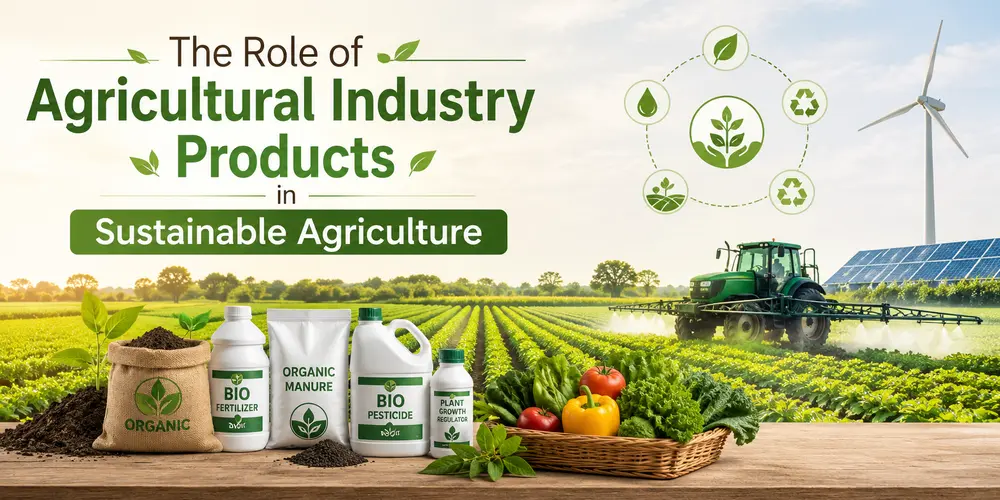
The Role of Agricultural Industry Products in Sustainable Agriculture
Sustainable agriculture isn’t really a niche topic anymore; it’s the whole base layer for how global food production is going to look later. And yeah, as populations climb up and arable land keeps feeling smaller, farmers, agribusiness folks, and the industrial suppliers have to juggle more at once. Higher yields, less harm to the environment, and healthier soil not just for this season but for the next generation too. In that whole mix, agricultural industry products, like crop nutrients, soil conditioners and even specialty chemicals such as zinc oxide, end up being pretty central. For farms and processors trying to source these inputs, options like Zinc oxide make access feel way more direct, with fewer delays than older supply chain routines. This piece digs into how these products fit into sustainable agriculture, and it puts a spotlight on the Netherlands agriculture sector, which gets mentioned a lot as one of the most efficient farming systems on the planet.
What Are Agricultural Industry Products?
Agricultural industry products are basically the raw materials, chemicals, and formulated inputs that move through the farming and food processing chain. They cover fertilizers, micronutrients, animal feed additives, crop protection agents, and also industrial compounds that get used for soil treatment and livestock support. They’re different from raw produce like grains or vegetables, because these are the supporting inputs that help farms stay productive, consistent, and scalable over time.
Some common groups include:
- • Soil and crop nutrients – zinc oxide, micronutrient blends, and trace mineral supplements that help fix deficiencies and lift yield quality.
- • Animal health and husbandry products – additives and topical formulations, including petroleum based products, used for livestock care and equipment upkeep.
- • Crop protection inputs – products that reduce pests, fungal problems, and even environmental stress effects.
- • Specialty industrial chemicals – compounds that show up in fertilizer production, feed processing, and agricultural equipment maintenance.
And it’s not only about pushing yield. The right input, when used properly, can reduce waste, avoid unnecessary overuse, and support long-term soil health. That’s the sustainability side of the equation too, even if it sounds technical.
Why These Products Matter for Sustainability
- Soil Health and Nutrient Balance: Depleted soil is one of the biggest risks to agricultural output that’s supposed to last. Micronutrients such as zinc matter for plant enzyme work and overall crop resilience, but in many regions, soils are becoming zinc-deficient because intensive farming has taken its toll. Adding appropriate industrial-grade inputs can restore balance, instead of leaning on excessive chemical fertilization, which can harm soil structure over time.
- Reducing Waste Across the Supply Chain: Sustainability is precision. When farms use agricultural industry products that are accurately formulated, they can waste fewer resources, apply inputs more efficiently, and cut runoff that otherwise harms local ecosystems. This precision-based logic also matches what we see in the Netherlands agriculture sector, where limited land has pushed constant innovation in smarter resource use.
- Supporting Livestock and Equipment Maintenance: A lot of agriculture runs on “non crop” needs too, like lubricants and protective compounds for machinery, fencing, and animal care. For operations trying to simplify procurement of these extra materials, being able to get Vaseline alongside other industrial and agricultural supplies can make logistics easier, especially for farms juggling multiple maintenance needs. It cuts down on scattered sourcing, which is one reason smaller operations sometimes move slower than they want to.
The Netherlands Agriculture Sector as a Sustainability Benchmark
Even though the Netherlands has a small land footprint, it still ranks among the top agricultural exporters worldwide. A big reason is that the agriculture industry in the Netherlands has leaned into technology, precision inputs, and closed loop farming systems. Dutch greenhouses, for example, often use much less water and fewer chemical inputs per unit of yield compared with conventional farming approaches elsewhere. That’s tied directly to how efficiently resources are managed, and it’s supported by reliable, higher-quality agricultural industry products.
Agriculture companies in the Netherlands have also experimented with vertical farming, controlled environment agriculture, and advanced nutrient dosing systems that aim to minimize waste while maximizing crop output. What stands out is that sustainability and productivity don’t have to fight. When the right industrial inputs are paired with careful resource planning, they can actually reinforce each other. And in terms of what gets produced, Netherlands agriculture products cover plenty—dairy, horticulture, seed potatoes, flowers, and more. A lot of it moves into global markets. That mix shows a farming culture that leans hard on efficiency, data driven decisions, and continuous investment in sustainable input sourcing.
Global Lessons From a Small Country With a Big Footprint
Dutch agriculture success also teaches something pretty simple for farms everywhere: sustainability is built one input at a time. Fixing nutrient gaps, keeping equipment in good condition, reducing chemical overuse, these “small” choices add up and can shape bigger environmental and economic outcomes over years. Farms that focus on sourcing reliable, well-formulated agricultural industry products tend to be in a stronger position to lower their environmental footprint while holding yields steady or even improving them over time.
Conclusion
Sustainable agriculture is not just about good intentions, it’s more like you need a steady way of getting the right industrial and agricultural inputs, and then using them with precision, plus a lot of patience. Whether it’s about fixing soil deficiencies or keeping farm machinery in good shape, products from the agricultural industry are quietly helping make sure modern farming stays productive, but also stays environmentally responsible. The Netherlands agriculture sector really shows what can happen when this idea gets scaled nationally. That said, the same overall principles also matter for farms of any size. And for businesses or agricultural operations that need a dependable place to source reliable industrial and agricultural chemicals, vandiemenchemicals.com provides a steady supply option for those inputs that support sustainable, efficient farming practices.
FAQS
1. What is sustainable agriculture?
Sustainable agriculture is a farming approach that helps grow food production while protecting the environment, conserving natural resources, and supporting long-term economic steadiness.
2. Why is the Netherlands Agriculture Sector globally recognized?
The Netherlands Agriculture Sector is often linked with advanced greenhouse farming, precision agriculture, innovative research, efficient irrigation systems, and high overall agricultural productivity.
3. What are the major Netherlands agriculture products?
Major Netherlands agriculture products usually include vegetables, fruits, flowers, dairy goods, potatoes, seeds, greenhouse technologies, and agricultural equipment.
4. How do agricultural industry products support sustainability?
They help improve crop yields, strengthen soil quality, save water, reduce environmental strain, and raise overall farming efficiency.
5. What technologies are commonly used in the Agriculture Industry in the Netherlands?
You can find precision farming, greenhouse automation, smart irrigation, AI based monitoring, climate control systems, and sustainable crop management.
6. Why are Agriculture Companies in Netherlands considered industry leaders?
Because they put real effort into research, new ideas, sustainable farming practices, advanced agricultural technologies, and also global agricultural exports.
7. How can farmers choose quality agricultural products?
Farmers should check product quality first, look for certifications, consider the supplier reputation, review technical support, confirm sustainability approaches, and think about the overall performance.
8. What is the future of sustainable agriculture?
The future is probably going to include AI-powered farming, precision agriculture, autonomous machines, renewable energy integration, smarter irrigation, and data-driven crop management, all aiming to boost productivity while also protecting the environment.